Plumber (Skagit)
City of Seattle
StalePosted Jun 25

Posted: January 29, 2026 (1 day ago)
This job was posted recently. Fresh listings typically have less competition.
State of Washington
Dept. of Fish and Wildlife
Location
Washington, 98504
Salary
$4,653 - $6,259
per month
Type
Full Time
More Science & Research jobs →Closes
This job involves leading hands-on monitoring of young salmon in Washington's Skagit River, managing traps and tagging programs to track their numbers, movements, and health.
The role also includes analyzing data and writing reports to guide conservation efforts like habitat restoration and fishing rules.
It's ideal for someone passionate about fish biology and fieldwork who enjoys leading teams and turning science into real-world protections for salmon populations.
Title- Skagit River Juvenile Salmon Biologist
Classification- Fish & Wildlife Biologist 2 (Bio2)
Job Status- Full-Time/Permanent
WDFW Program- Fish
Program - Wild Salmon Production & Evaluation Section
Duty Station- Stanwood, Washington – Snohomish County
Hybrid/Telework- The employee is expected to work in the field 1–3 days per week and may work remotely on other days. A dedicated workspace is available in the Stanwood office, but employees using this space are expected to work in the office at least three days per week.
Learn more about being a member of Team WDFW!
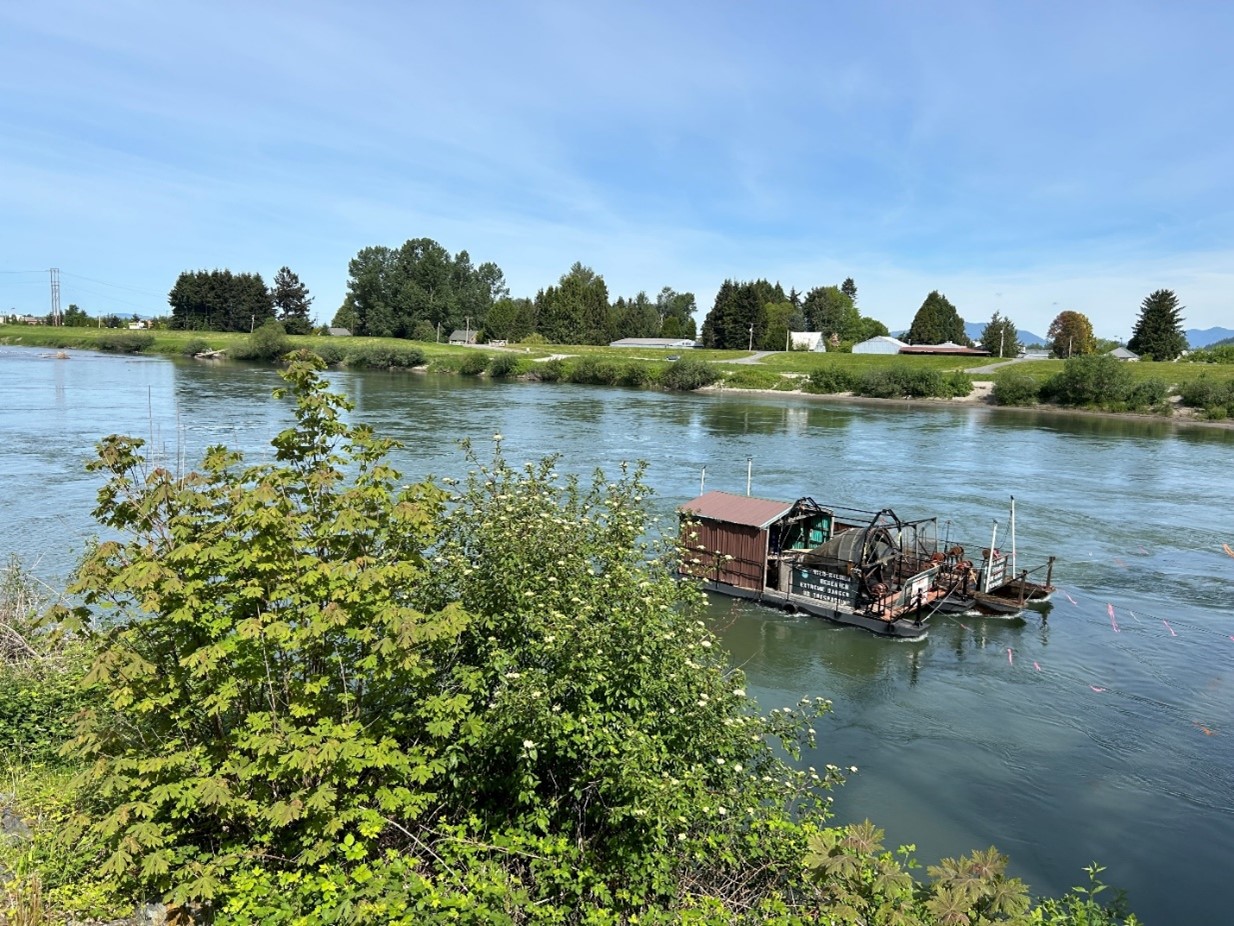
Photo Caption: Wild salmon juvenile monitoring trap on the Skagit River – Photo Credit: Peter Lisi
This journey-level biologist position plays a critical role in advancing salmon conservation and management in Puget Sound through hands-on project management of population monitoring and research efforts.
The position leads juvenile salmonid monitoring in the Skagit River basin, including operation of a rotary screw trap on the mainstem river and, in most years, additional trapping and tagging efforts such as a fence weir on Mannser Creek and a coded-wire tag (CWT) program at Baker Lake.
In this role, you’ll transform field data into meaningful insights by analyzing and interpreting results and preparing annual, contractual, and technical reports that document study design, findings, and outcomes.
This work directly informs high-impact agency decisions related to habitat restoration effectiveness, harvest management strategies, and hatchery operations - making this a unique opportunity to connect field science with real-world conservation outcomes.
What to Expect-
Among the varied range of responsibilities held within this role, the Skagit River Juvenile Salmon Biologist,
Manages and conducts natural resource assessments with a focus on determining the abundance, migration timing, and life-history diversity of juvenile salmonids:
Prepares annual, contractual, and technical reports:
Directs and supervises technical staff to achieve project objectives:
Working Conditions:
Work Setting, including hazards:Work is conducted both in the field and an office setting.
Field work primarily consists of operating a rotary screw trap on the Skagit River from January through July, with periodic work at the Mannser Creek fence weir and Baker Lake Dam.
Traps have minimal cover, are exposed to inclement weather, and are subject to highly variable river and debris flows.
Screw traps have various moving parts (large winches, trap cone) that can present pinching and crushing hazards during operation.
Screw traps are accessed using a motorboat in variable weather and river conditions.
Trap work, including that at Mannser, requires long hours of work and on the weekends, and the ability to carry heavy (50+ lbs) objects on slippery and uneven terrain.
Potential field hazards include slippery surfaces on traps, boats, and on shore that could lead to accidentally entering the water; rotating cones and winches that create pinch points; dyes (Bismarck Brown) and anesthetic compounds (MS-222); encounters with wildlife and stinging insects; working in low light conditions; working at night while fatigued; carrying equipment over uneven terrain; operation of power tools.
This position may involve working in or near water, including tasks that require navigating, negotiating, and performing duties related to water environments.
Schedule (i.e., hours and days): 40 hours/week, 8-10 hours/day, although schedule varies greatly between field and off-season.
Work primarily occurs from Monday through Friday, although additional weekend and holiday work may be required during trapping season from January through July.
During trapping, employee works in a rotating schedule of 2-4 days at mainstem trap site. During off-season, employee works Monday through Friday in an office setting.
Travel Requirements: Some overnight travel - usually in the Puget Sound region - is required to attend trainings or assist with other field work.
Tools and Equipment: 4wd trucks, trailers (worksite campers, boat trailers, flatbed trailers, etc.), work skiffs, outboard motors, rotary screw and scoop traps, fence weirs constructed of trap boxes and wooden panels, hand tools (rakes, shovels, crowbars, sledgehammers, etc.), power tools (chain saws, circular saws, drills, etc.), electric and manual winches, hydraulic and water pumps, generators, overhead and spot lights, agency cell phone, laptop, electronic sampling equipment (CWT detector), CWT machine, scale, knives, forceps, measuring boards, personal protective equipment (PFD), waders and boots, totes/bins, scale and genetic cards, other miscellaneous fish sampling gear
Customer Interactions: Employee will have regular interaction with State and federal (NOAA, USGS, USACE) agencies, tribal co-managers (Sauk-Suiattle Indian Tribe, Upper Skagit Indian Tribe, Swinomish Indian Tribal Community), Skagit River System Cooperative, local governments (City of Mount Vernon) and utility companies (Seattle City Light, Puget Sound Energy), Skagit River Dike District 17, BNSF Railways, general public, other local and private groups and companies.
Qualifications:
Required Qualifications:
Option 1: A bachelor’s degree in fisheries, wildlife management, natural resource science, or environmental science and one (1) year of professional experience in fish or wildlife management or research
Six (6) months experience training personnel, assigning work, evaluating performance, and providing feedback.
Note: A master’s degree or Ph.D. in the applicable sciences will substitute for the required professional experience, but not the supervision experience.
Option 2: Equivalent education/experience.
Licenses: Valid driver’s license
Preferred Qualifications:
In addition to the required qualifications, our ideal applicant will possess one or more of the following:
Writing: Demonstrated success in writing or participating in at least 1 scientific report, peer-reviewed publications, or thesis related to biological or ecological research.
Experience may include synthesizing and critically evaluating multiple sources of information, including original field or analytical data and relevant scientific literature.
Communication: Ability to clearly articulate scientific concepts and facts, both orally and in writing. Aptitude for using background, language, and concepts appropriate for each target audience.
Ability to clearly describe research plans to project collaborators, coordinate activities among multiple collaborators, and provide project status updates.
Organization: Ability to set clear project objectives, develop a work plan and meet deadlines. Proficiency in setting and achieving interim project milestones consistent with long-term research priorities. Ability to plan research expenditures and track budgets.
Field experience: Experience with fisheries sampling and capture techniques in rivers and streams, such as electrofishing, rotary screw traps, scoop traps, fence weirs, redd surveys, angling, rafting, or wading.
Experience handling, identifying juvenile salmonids.
Comfortable working in large, dynamic river systems during challenging conditions (rain, cold, high river flow); ability to identify, avoid, and mitigate potential hazards in such environments.
Familiar with equipment used to implant and scan for coded wire tags.
Data analysis: Ability to develop and execute analytical approaches to address scientific questions, and ultimately draw conclusions from biological data based on facts and evidence.
Experience with descriptive, comparative and advanced statistical approaches. Knowledge of statistical programming languages and/or platforms such as R.
Experience entering, organizing, and querying data sets using database software such as Microsoft Access.
Salmonid ecology: Knowledge of salmonid behavior, life history, ecology, and population dynamics.
Relationships: Ability to earn participation, trust, and respect from project partners and co-managers. Experience coordinating activities of multiple entities and collaborators.
Aptitude for addressing sensitive issues on which stakeholders have strong and sometimes opposing opinions by providing a balanced assessment of scientific results.
Your application should include the following:
Supplemental information:
In addition to pay and other special employee programs, there are other benefits that WDFW employees may be eligible for. Click the “Benefits” tab at the top of this announcement to learn more.
Important Note:
All new employees must complete an Employment Eligibility Verification Form (I-9 Form) on their first day of work.
If hired for this or any position at WDFW, you will be required to provide documentation proving you are eligible to work in the United States.
For a list of acceptable documents, please use the following link: https://www.uscis.gov/i-9-central/form-i-9-acceptable-documents
Union - WAFWP:
This position is in the bargaining unit represented by the Washington Association of Fish & Wildlife Professionals and is subject to the terms of the Collective Bargaining Agreement between the State of Washington, Department of Fish & Wildlife, and the Washington Association of Fish & Wildlife Professionals.

Veteran and Military Spouse Preference Notice:
Per RCW 73.16.010 Veterans and qualifying spouses who meet the minimum qualifications of a position are eligible for preference during the initial application review stage. To receive this benefit, please do the following:
Diversity, Equity, and Inclusion Employer
As part of WDFW’s efforts to advance respectful and inclusive work environments, the Agency expects inclusivity as part of our professional interactions and communications.
Therefore, we want to ensure that all individuals feel welcome, are treated fairly and respectfully.
All staff are empowered to fully contribute to serving their work unit, Agency, and the citizens of Washington.
The Department of Fish and Wildlife is an equal opportunity employer.
We strive to create a working environment that includes and respects cultural, racial, ethnic, sexual orientation and gender identity diversity.
Women, racial and ethnic minorities, persons of disability, persons over 40 years of age, disabled and Vietnam era veterans and people of all sexual orientations and gender identities are encouraged to apply.
Request an accommodation: Persons needing accommodation in the application process or this announcement in an alternative format please contact Jayme Chase by phone 360-902-2278 or email Jayme.Chase@dfw.wa.gov, or the Telecommunications Device for the Deaf (TDD) at 800-833-6388.
Technical Difficulties: If you are having technical difficulties creating, accessing, or completing your application, please call NEOGOV toll-free at (855) 524-5627 or support@neogov.com.
Other questions: If you have other questions regarding this position, please reach out to diana.humes@dfw.wa.gov
Follow us on social media: LinkedIn | Facebook | Instagram
dh
Check your resume before applying to catch common mistakes